


February 23, 2016
FOR IMMEDIATE RELEASE
Offenders are producing millions of license plates every year
while learning valuable job skills
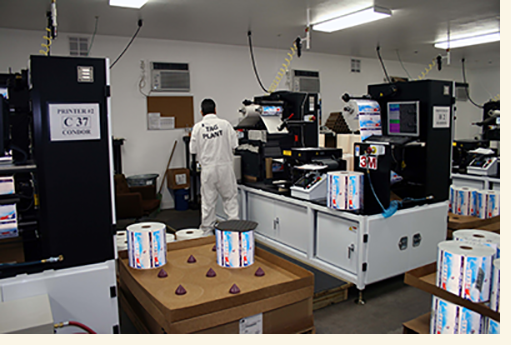 When people think of license plates they may have visions of offenders stamping out rectangular pieces of metal by the thousands. While this is true what people may not realize are the marketable job skills the offenders are learning while incarcerated.
At the Wynne License Plate Plant there are 135 offenders assigned to manufacture license plates. These offenders are provided an opportunity to enroll in a 6 to 18 month job skills training program in areas of graphic design, computer operations, shipping and receiving, warehousing, machine operations and quality control. Upon successful completion of the training they’re provided a certificate that they can use to help obtain employment after release.
Since 1935 the Texas Department of Criminal Justice has had the responsibility of manufacturing license plates. The plates were originally made at the Huntsville Unit but in 1975 the production was moved to the Wynne Unit, also in Huntsville.
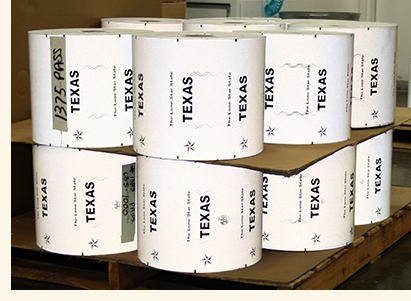 The plates were originally made using a traditional embossing process up until 2001 when specialty and annual plates switched over to a digital format. The general issue plates were still made by embossing. But in 2009, the Wynne License Plate Plant converted over to an all-digital manufacturing process.
The digital process is environmentally friendly and does not require the use of inks or thinners. Ovens, which were used in the embossing method, are no longer needed.
The digital process allows more plates to be produced daily because it is less labor intensive and it minimizes the human error factor by shortening the process from five steps to three steps.
TDCJ projects it will produce approximately 14.2 million standard and 400,000 specialty plates in FY 2016.
###